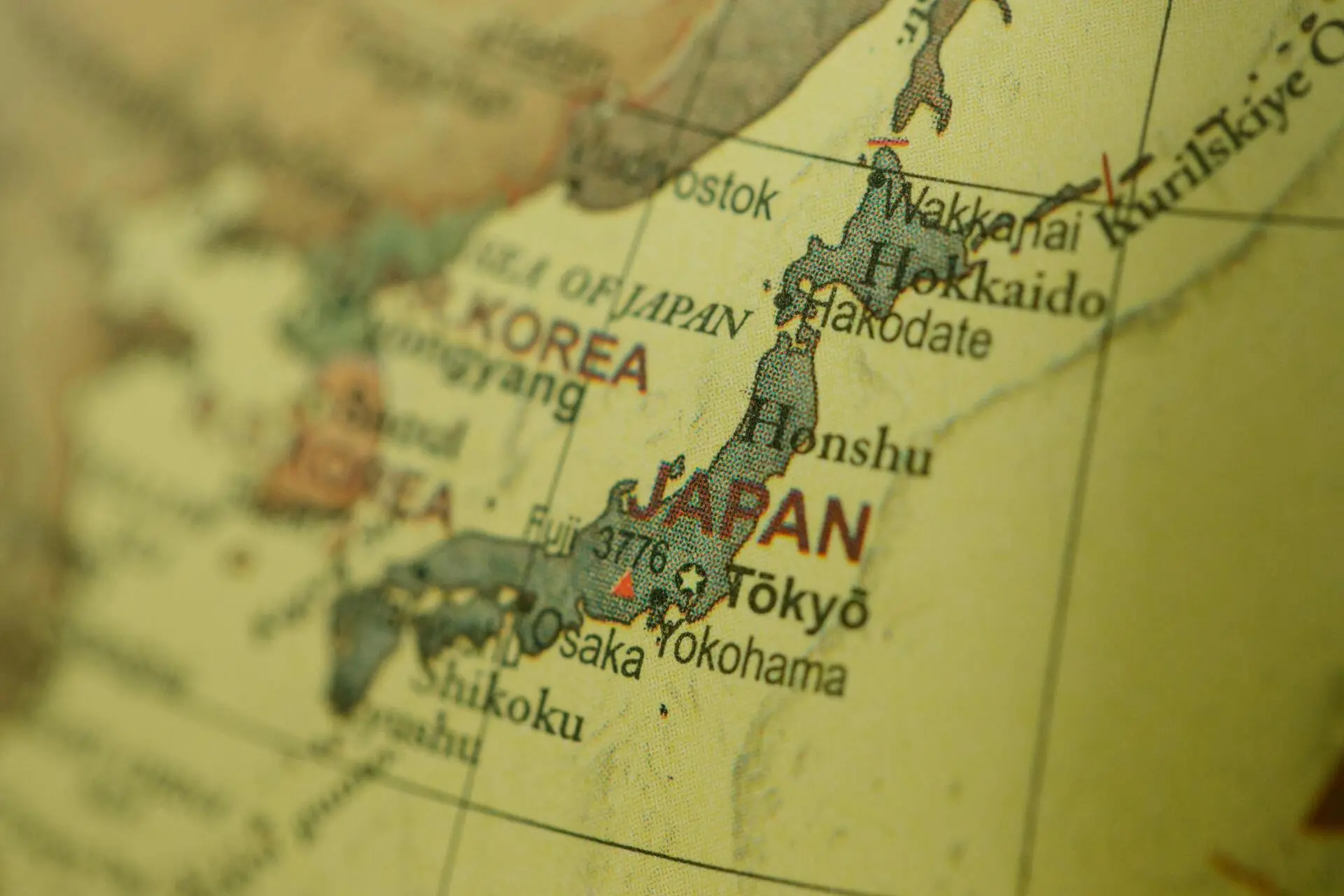
TravelPreparing for your trip to Japan in 2026 (everything you need to know)
Are you planning to go to Japan? Would you like to know how to prepare for your trip to Japan? You've come to the right place—we'll explain EVERYTHING!

Planning your trip to Japan and wondering if your charger will fit into the hotel outlet? The outlet in Japan is not like those in most countries. Japan uses Type A and B outlets, designed for plugs with two flat blades, and a voltage of 100 V, compared to 220 to 240 V in most countries in Europe, Africa, and Asia, and 110 to 127 V in North America.
In this article, we review the different types of Japanese outlets, the need for an adapter depending on your country of departure, the voltage and frequency of the electrical grid, devices that require a voltage converter, such as hair dryers, where to buy a travel adapter, outlets on the Shinkansen, and mistakes to avoid with your phone, laptop, or power bank.
Good news: for most modern electronic devices, a small plug adapter is enough, regardless of the season or the length of your stay. And since your phone isn't much use without a connection, we'll also see how to stay connected with an eSIM as soon as you land.

JAPAN
active
20 Go
remaining
Operator
NTT docomo
Expires
In 3d • Jun 12
Top up
JAPAN
active
20 Go
remaining
Operator
NTT docomo
Expires
In 3d • Jun 12
Top up
JAPAN
active
20 Go
remaining
Operator
NTT docomo
Expires
In 3d • Jun 12
Top up
No blocked apps
Tethering enabled
24/7 customer support
No blocked apps
Tethering enabled
24/7 customer support
Once your adapter is in your suitcase, install your Japan eSIM before leaving and connect as soon as you land. voilà eSIM offers excellent value for money, an easy-to-install eSIM, an easy-to-use app, and 24/7 human customer support.
In Japan, you will find two types of electrical outlets: type A and type B. These are the same formats used in the United States and Canada. The most common Japanese outlet is type A, with two flat slots. You will also occasionally encounter type B outlets, which add a hole for a grounding pin.
Choose your departure country below: you will see immediately if your plugs fit a Japanese socket, if you need an adapter, and how your voltage compares to Japan's 100 V.
No need for an adapter: your type A plugs fit directly into Japanese sockets. For a 3-prong plug (type B), bring a two-prong adapter (no ground pin) for older two-hole outlets.
Japan operates at 100 V, compared to 120 V at home: the difference is small. Most of your devices will work, but check the labels on heating appliances.
Frequency: 60 Hz at home, 50 Hz in eastern Japan and 60 Hz in the west. Modern devices generally accept both.

Type A sockets have two flat, parallel slots. The corresponding male plug has two flat blades, without a ground pin. This is the format you will encounter most often, both in hotels and on trains.
The type B outlet features the two flat slots of type A and adds a round hole for grounding. A type A plug can therefore fit into a type B outlet. The reverse is not true: a three-prong plug (type B) will not fit into an old two-hole outlet (type A).

It all depends on the country you are departing from. Here is the plug type used in the main departure countries and what you need to prepare for your trip to Japan.
| Departure country | Plug type | Voltage | Compatible in Japan? | What you need |
|---|---|---|---|---|
| France, Belgium | C and E | 230 V | No | Type A adapter |
| Switzerland | J (and C) | 230 V | No | Type A adapter |
| United Kingdom, Ireland | G | 230 V | No | Type A adapter |
| Spain, Italy, Germany | C and F (and L in Italy) | 230 V | No | Type A adapter |
| United States, Canada | A and B | 120 V | Yes | Nothing, except for a 3-prong plug |
| Australia, New Zealand | I | 230 V | No | Type A adapter |
Yes, if you are coming from Europe, the UK, or Australia, you will need a Japan adapter. Your European round pins or British rectangular pins simply won't fit into a Japanese outlet: the shape is different, and there is no trick to plug them in without an adapter.
Things are simpler for American and Canadian travelers: American and Japanese outlets are almost identical. Their Type A plugs fit directly into Japanese outlets. The only exception: devices with a ground pin (Type B), which do not fit into old two-hole outlets. A small two-prong adapter (no ground pin) solves the problem.
One point to keep in mind: an adapter only changes the shape of the plug. It does not change the voltage, and it does not protect a device from a different voltage. That is why the question of voltage, which we will see right after, matters as much as the adapter itself. If you want an overview of what needs to be sorted out before departure (visa, currency, payment, time difference), take a look at our article to prepare your trip to Japan.
You need an adapter that converts your European (or British) plug into a Type A plug. This is the format that fits into all Japanese outlets, both old and new. You have three options, depending on your trip and your devices.
It's the lightest little cube: on one side, a European female socket; on the other, two Type A flat blades. It is more than enough to charge a phone, a laptop, or a camera. Take two or three if you are traveling in a group, because everyone will want to charge their phone in the evening.
The universal travel adapter combines several formats (A, C, G, I…) in a single case. It costs a little more, but it can be reused on all your travels, from Japan to Southeast Asia and the United Kingdom. If you travel often, or if Japan is just one destination among many, it's the most cost-effective purchase.
Many adapters include USB-A and USB-C ports. With a single adapter, you can then charge your phone, your watch, and your power bank at the same time, without needing multiple chargers. Practical in Japanese hotel rooms, which are often small and not always generous with outlets.
Two tips for choosing your plug adapter correctly:
The voltage in Japan is 100 V throughout the country, according to the Japan National Tourism Organization (JNTO): the Japanese power grid operates at 100 V (50/60 Hz), compared to 230 V (50 Hz) in Europe and 120 V (60 Hz) in North America. It is one of the lowest voltages in the world. If you come from a country with 220 to 240 V, the voltage is therefore less than half of what you have at home.
The frequency of the current depends on the region. Eastern Japan (Tokyo, Yokohama, Sendai, Sapporo) operates at 50 Hz, as in Europe. The west (Nagoya, Kyoto, Osaka, Hiroshima) is at 60 Hz, as in North America. The border follows the Fuji River in Shizuoka Prefecture, then heads north to the city of Itoigawa in Niigata Prefecture.

Why two frequencies on the same island? It is a legacy from the end of the 19th century: Tokyo purchased its first generators from the German company AEG (50 Hz) in 1895, and Osaka purchased its own from the American General Electric (60 Hz) in 1896. The network has never been unified since. For a tourist, the difference changes almost nothing: modern devices generally accept both 50 Hz and 60 Hz, and usage remains identical in both Tokyo and Osaka.
Before leaving, flip your charger over and look for the "INPUT" line. If you read "100-240V ~ 50/60Hz", your device is dual voltage: it works in Japan just like it does at home, with a simple adapter. This is the case for almost all recent phone, laptop, tablet, camera, e-reader, and electric toothbrush chargers.

If the label only indicates "230V" or "220-240V", the device is not intended for the Japanese network. Plugged into 100 V, it risks running slowly, overheating abnormally, or not starting at all.
The voltage converter (also known as a transformer) steps up the Japanese 100 V to the 230 V required by a European device. You only need it for devices that are not dual-voltage. You must then choose a model with a wattage higher than that of your device. For a very powerful heating appliance, the transformer quickly becomes heavy and bulky in a suitcase.
| Device | Usually dual voltage? | What you need in Japan |
|---|---|---|
| Smartphone charger | Yes | Adapter only |
| Laptop charger | Yes | Adapter only |
| Camera, e-reader, or tablet charger | Yes | Adapter only |
| Power bank (recharged via USB) | Yes | Adapter only for the charger |
| Electric toothbrush or razor | Often | Check the label |
| Hair dryer, hair straightener, curling iron | Rarely | Dual-voltage travel model or converter |
| Kettle, iron | No | Leave at home |
For your hair, the simplest option is a dual-voltage travel hair dryer, or the one at your accommodation: check your hotel's description to see if it provides a hair dryer.
To plug in a device in Japan without any bad surprises, follow these three steps:
At the hotel, outlets are often located near the desk or the headboard. In case you forget yours, many hotels also lend adapters upon request: the front desk is there to help you.
In town, some fast-food chains and family restaurants also offer outlets, according to the JNTO. For a long day of visiting Tokyo, Kyoto or Osaka, a power bank remains your phone's best ally: choose a capacity of at least 10,000 mAh if you use maps and translation frequently.
On the Shinkansen, access to a power outlet depends on the train model and your seat. On the Tokaido line (Tokyo, Nagoya, Kyoto, Osaka), JR Central states:
If you are traveling on an older model, request a window seat when booking. These outlets are classic Japanese sockets: your adapter will also be useful on the train. Are you planning to travel a lot by train? Check if the Japan Rail Pass is cost-effective for your itinerary.
The simplest and cheapest way is to buy your adapter before departure. You can find them online (Amazon, electronics retailer websites) and in electronics, hardware, or travel supply stores. Order it a few days before leaving, to give yourself time to check that it matches Type A.
At the departure airport, shops offer them too, but prices there are often higher. Keep this option for last-minute emergencies, especially since every cent counts in your Japan travel budget.
Once there, purchasing is easy in major cities. The JNTO lists:
If you have a specific device to power (medical device, vintage photo equipment), settle the question before leaving: once there, you would waste precious sightseeing time searching for the right converter.
Here are the most common mistakes made by travelers, and how to avoid them:
Once the issue of power outlets in Japan is settled, the question of connection remains. Your phone is your map, your translation tool, your train ticket, and your camera: without internet, it loses a large part of its utility. Roaming in Japan can be expensive, and public Wi-Fi requires you to stay near a hotel or a cafe.
To compare all solutions (eSIM, SIM card, Pocket Wi-Fi, free Wi-Fi), read our article on internet in Japan.
The eSIM is the simplest solution for you to connect as a tourist: you buy it online, install it before departure, and you are connected as soon as you land. No shop to find, no physical SIM card to handle, and your regular SIM card stays in your phone.
At voilà eSIM, the Japan eSIM works on the NTT docomo 5G network. Plans start at $1.40 for 1 GB valid for 7 days, and the recommended 20 GB plan valid for 30 days costs $16.80, with no subscription or hidden fees: no need to withdraw money or look for a shop upon arrival. voilà eSIM offers excellent value for money, an easy-to-install eSIM, an easy-to-use app to track your consumption, and human customer support available 24/7 if you have an issue on-site.
You can also share your connection with your laptop or your loved ones' phones. If you have never used an eSIM, here is how to install an eSIM in a few minutes.
Check in a few seconds if your smartphone accepts eSIM, before booking your plan for Japan.
JAPAN
active
20 Go
remaining
Operator
NTT docomo
Expires
In 3d • Jun 12
Top up
JAPAN
active
20 Go
remaining
Operator
NTT docomo
Expires
In 3d • Jun 12
Top up
JAPAN
active
20 Go
remaining
Operator
NTT docomo
Expires
In 3d • Jun 12
Top up
No blocked apps
Tethering enabled
24/7 customer support
No blocked apps
Tethering enabled
24/7 customer support
Once your adapter is in your suitcase, install your Japan eSIM before leaving and connect as soon as you land. voilà eSIM offers excellent value for money, an easy-to-install eSIM, an easy-to-use app, and 24/7 human customer support.
Rony is our in-house travel-connected expert. Always curious and never too far from an airport, he explores the latest destinations while testing the newest eSIM solutions. He signs our articles on travel and mobile technology, with a single mission: to turn his discoveries into clear, reliable, and smart advice to accompany you anywhere in the world.
See all articles
TravelAre you planning to go to Japan? Would you like to know how to prepare for your trip to Japan? You've come to the right place—we'll explain EVERYTHING!

Mobile connectivityHow to access the internet in Japan? All the solutions to stay connected during your trip (eSIM, free Wi-Fi, Pocket Wi-Fi, etc.)

TravelOfficial 2026 prices, covered routes, booking, Nozomi, and cost-effectiveness calculation: our opinion on the Japan Rail Pass.