 Travel
January 14, 202611 min
What to do in Japan? The 20 most beautiful places to visit
Discover the 20 must-see places to visit for a memorable trip to Japan in 2026: from Tokyo to Okinawa, via Kyoto and Mount Fuji.

How much does a trip to Japan cost? For 2 weeks, plan on about $1,310 to $1,850 once you are there, depending on where you sleep and how you travel, plus the price of your flight. Japan has a reputation for being expensive, but with a weak yen in 2026, the cost of living in Japan often feels close to home, and eating out can even be cheaper.
In this article, we break down every expense with verified prices: flights, accommodation (hostels, hotels, ryokan), food, transportation (Shinkansen, JR Pass), activities and internet. You will also find my real budget, estimates for 10 days, 15 days and 3 weeks, the cheapest time to go and 7 tips to travel Japan without blowing your budget.
Yen and euro amounts are converted at the European Central Bank reference rates of October 22, 2026: $1 = ¥157 and €1 = $1.12.

JAPAN
active
20 Go
remaining
Operator
NTT docomo
Expires
In 3d • Jun 12
Top up
JAPAN
active
20 Go
remaining
Operator
NTT docomo
Expires
In 3d • Jun 12
Top up
JAPAN
active
20 Go
remaining
Operator
NTT docomo
Expires
In 3d • Jun 12
Top up
No blocked apps
Tethering enabled
24/7 customer support
No blocked apps
Tethering enabled
24/7 customer support
A Japan eSIM installed before you leave and active as soon as you land, for your whole stay. voilà eSIM means excellent value for money, an eSIM that is simple to install, an easy-to-use app and human customer support 24/7.
The cost of a stay in Japan mostly depends on two things: where you sleep and how many Shinkansen rides you take. Everything else (food, sightseeing, internet) varies much less from one travel style to another. Here is what an average budget looks like. The table below starts from my real two-week trip, then only swaps the accommodation for the starting prices published by the Japan National Tourism Organization (JNTO).
| Expense (14 nights, per person) | Hostel | Budget hotel | Mid-range hotel |
|---|---|---|---|
| Accommodation | $355 | About $535 | About $890 |
| Food | $430 | $430 | $430 |
| Trains, subway and buses | $300 | $300 | $300 |
| Sightseeing | $154 | $154 | $154 |
| Internet (20 GB eSIM) | $16.80 | $16.80 | $16.80 |
| Souvenirs | $56 | $56 | $56 |
| Total without the flight | About $1,310 | About $1,490 | About $1,850 |
The budget hotel column is based on a single room from ¥6,000 a night, the mid-range one on a double room from ¥10,000, paid alone. Shared by two people, that room brings accommodation down to about $445 per person: traveling as a couple, with friends or with family is one of the best ways to cut the bill.
My two-week trip through Tokyo, Kyoto and Osaka cost me about $1,310 once there, roughly $94 a day, plus about $915 for the flight from Paris, with a layover in Frankfurt. I slept in hostels (about $26 a night), ate at restaurants for lunch and dinner while grabbing the konbini deals after 8 p.m., and paid for most of my train rides on the Shinkansen. Since many temples and shrines are free, sightseeing only cost me $154. It was a smart traveler's budget, without going without.
The exchange rate matters a lot. Based on European Central Bank reference rates, $1 was worth on average about ¥110 in 2021, and about ¥157 on October 22, 2026. With the same amount of dollars, you get about 43% more yen (JPY) than five years ago.
In practice, a ¥10,000 hotel night cost about $91 in 2021, compared with $64 today. A ¥650 bowl of ramen costs about $4.10. That is why life in Japan feels cheaper than expected, especially when it comes to food. To withdraw cash and pay without fees, read our article on money in Japan.
Your flight is the biggest single expense. I paid about $915 (€815) for a round trip from Paris, with a layover in Frankfurt. Fares vary a lot depending on the season, the airline and the number of layovers: a nonstop flight to Tokyo usually costs more.
My advice to pay less: book several months ahead, compare several dates and avoid peak periods: school holidays, Golden Week and New Year. Landing at Narita, Haneda, Kansai or Fukuoka is often a wash: choose based on your itinerary, and keep an eye on checked baggage fees.
Accommodation is the expense that changes your budget the most. Here are the starting prices published by the Japan National Tourism Organization, converted to dollars:
| Type of accommodation | Price from, per night | In dollars |
|---|---|---|
| Guesthouse (single room) | ¥2,000 | About $13 |
| Hostel | About ¥3,000 | About $19 |
| Budget hotel (single room) | ¥6,000 | About $38 |
| Mid-range hotel (double room) | ¥10,000 | About $64 |
| Ryokan, dinner and breakfast included | ¥10,000 per person | About $64 |
| 4-star hotel (double room) | ¥30,000 | About $191 |
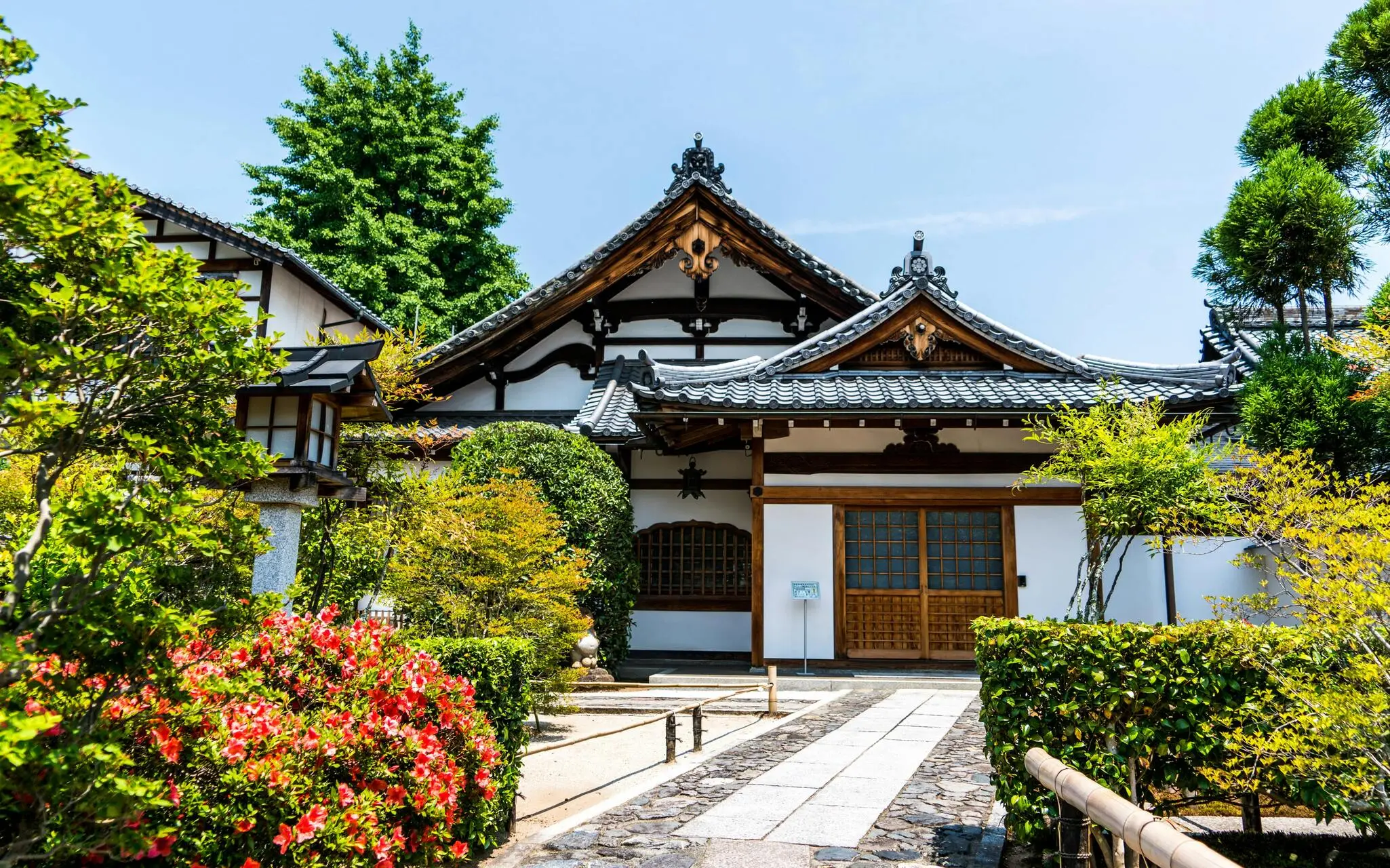
These are minimums: in Kyoto, in spring and fall, rates climb fast. Business hotels, small but clean and close to the stations, offer the best value for a first trip. Capsule hotels are a practical experience worth trying once, with plenty of options. A ryokan, the traditional inn with tatami floors and dinner served in your room, costs more, but one or two nights are enough to enjoy the experience.
Good news: you eat very well in Japan, and for little money. A few prices I checked:

On my side, food cost me $430 for the whole stay, about $30 a day. On a tighter budget, alternating between konbini, gyudon chains and small ramen shops, you can go well below that. A mid-range restaurant costs a little more, and a high-end meal (a kaiseki dinner, a famous sushi counter) can on its own eat up several days of that budget.

Getting around is the hardest expense to estimate, because it depends on your itinerary. In cities, it costs little; on the Shinkansen, much more. A few official fares:
| Trip or ticket | Price | In dollars |
|---|---|---|
| Tokyo-Kyoto on the Nozomi Shinkansen | ¥14,170 | About $90 |
| Tokyo-Hiroshima on the Nozomi Shinkansen | ¥19,760 | About $126 |
| Kyoto-Osaka by train | ¥580 | About $3.70 |
| 24-hour subway pass (Tokyo Metro) | ¥600 | About $3.80 |
| Limousine Bus, Narita Airport to downtown Tokyo | ¥3,200 | About $20 |
| Taxi in Tokyo, base fare | From ¥500 | About $3.20 |
| 7-day JR Pass | ¥50,000 | About $318 |
| 14-day JR Pass | ¥80,000 | About $509 |

Since the price increase of October 2023, the JR Pass no longer pays off for a simple Tokyo-Kyoto-Osaka loop: you need long rides, such as Hiroshima, to make it worth it. We run the numbers for your itinerary in our article on the Japan Rail Pass. Renting a car only makes sense in rural areas: in cities, parking is expensive. For everyday travel, a Suica card lets you pay for the subway, buses and konbini without buying a ticket every time.
This is the easiest expense to control, because many places are free: Sensō-ji Temple, Fushimi Inari Shrine in Kyoto, parks, neighborhoods, several observation decks and most festivals. Attending a festival (matsuri) costs nothing, and every season has its own: it is one of the best ways to discover the local culture. A few prices for paid attractions:

For shopping, 100-yen shops (Daiso) are perfect for small souvenirs. To pick your visits, check out our selection of the 20 must-see places in Japan.
Internet is one of the cheapest items of your trip. voilà eSIM plans for Japan cost $9.60 for 10 GB and $16.80 for 20 GB, valid for 30 days, on the NTT Docomo network. You install the eSIM before you leave and you are online as soon as you land, with no device to carry.
By comparison, a pocket wifi rents from about $4.70 a day, roughly $66 over two weeks, and your carrier's roaming outside your plan can get expensive fast. All the options are compared in our article on internet in Japan.
Based on my pace (about $94 a day in hostels, eating out included), here is an estimate by trip length, not counting the flight:
| Trip length | Hostel budget | Budget hotel |
|---|---|---|
| 10 days | About $940 | About $1,065 |
| 15 days | About $1,400 | About $1,590 |
| 3 weeks | About $1,970 | About $2,240 |
These are ballpark figures. The longer the trip, the lower your daily cost: you stay longer in each city and take fewer long train rides.
Flight and hotel prices follow demand, driven by the weather and holidays. The most expensive periods are cherry blossom season (late March and early April), Golden Week (late April and early May), mid-August around Obon, the red maple season in November and New Year.
The cheapest are usually January and February, outside New Year, and June, during the rainy season. Early December is also a good option, with cool, dry weather. To pick your month based on weather and festivals, read our article on the best time to visit Japan.
Many restaurants offer a lunch set (teishoku) that costs less than the dinner menu, for the same dish.
In konbini and supermarkets, bento boxes and ready meals are often marked down in the evening: I got 50% off after 8 p.m.
Neighborhoods are easy to explore on foot, and the 24-hour subway pass costs ¥600, about $3.80.
A few months ahead and some flexibility on dates often make a real difference on the biggest expense of the trip.
Alternate between hostels, business hotels and one or two nights in a ryokan: you get varied experiences to share, without pushing up the total.
Tap water is safe to drink in Japan: a reusable bottle saves you from buying drinks all day long.
For two weeks, a 20 GB eSIM at $16.80 costs about four times less than a rented pocket wifi, and you have nothing to carry or return. With voilà eSIM, you get excellent value for money, an eSIM that is simple to install from an easy-to-use app, and human support 24/7 if anything goes wrong on the ground.
JAPAN
active
20 Go
remaining
Operator
NTT docomo
Expires
In 3d • Jun 12
Top up
JAPAN
active
20 Go
remaining
Operator
NTT docomo
Expires
In 3d • Jun 12
Top up
JAPAN
active
20 Go
remaining
Operator
NTT docomo
Expires
In 3d • Jun 12
Top up
No blocked apps
Tethering enabled
24/7 customer support
No blocked apps
Tethering enabled
24/7 customer support
A Japan eSIM installed before you leave and active as soon as you land, for your whole stay. voilà eSIM means excellent value for money, an eSIM that is simple to install, an easy-to-use app and human customer support 24/7.
Rony is our in-house travel-connected expert. Always curious and never too far from an airport, he explores the latest destinations while testing the newest eSIM solutions. He signs our articles on travel and mobile technology, with a single mission: to turn his discoveries into clear, reliable, and smart advice to accompany you anywhere in the world.
See all articlesTravelDiscover the 20 must-see places to visit for a memorable trip to Japan in 2026: from Tokyo to Okinawa, via Kyoto and Mount Fuji.
 Travel
Official 2026 prices, covered routes, booking, Nozomi, and cost-effectiveness calculation: our opinion on the Japan Rail Pass.
 Travel
The yen, 2024 banknotes and the six coins, the dollar-yen exchange rate, where to exchange and withdraw money, and how to pay by card or cashlessly in Japan.